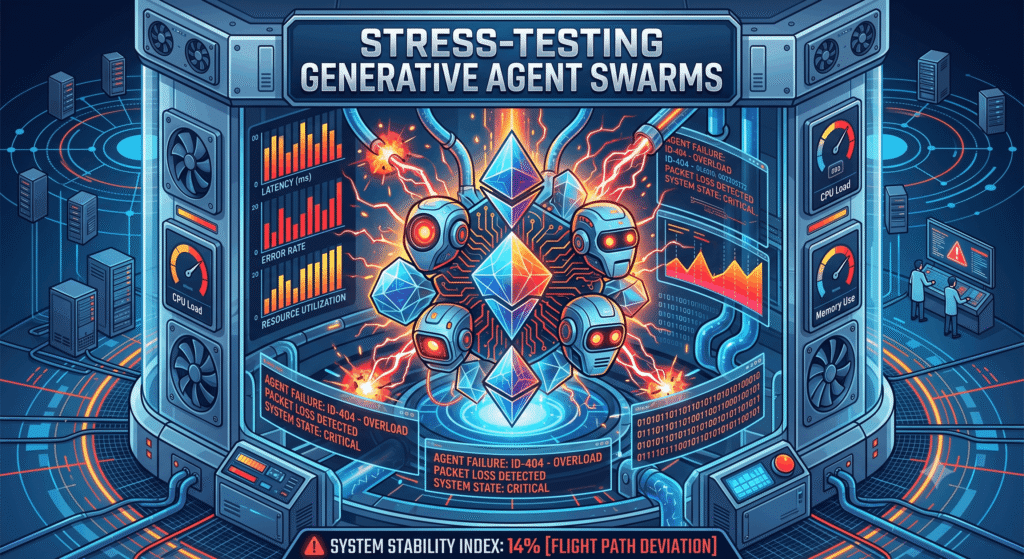
Last semester, I took a module called Advanced Reinforcement Learning, where we chose to do a deep dive into generative agents and AI swarms. Instead of just reading the basic theory, we spent months building a system to see how multiple AI agents could work together to solve complex tasks in real time. Everything worked well in our private tests, but the real challenge came during our final presentation. The audience, made up of professors, classmates, and industry professionals, started asking really tough, practical questions about the weak points of AI swarms. They wanted to know how we handle slow response times when agents pass tasks to each other, how we find out which specific agent broke down when the system fails, and whether these AI teams will eventually replace human software developers.
We defended our project by showing that managing an AI swarm is less about writing clever prompts and more about building a solid network. We explained how we keep the system fast by using a shared database instead of passing huge text files back and forth, and how we use tracking tools like LangSmith to see exactly what each agent is doing in real time. To wrap up, we told the audience that AI swarms will not replace human developers. Instead, these agents will act like helpful teammates that handle the boring, repetitive chores, allowing humans to focus on big-picture design and creativity. Our presentation went great, and our grades are locked in, but the biggest lesson we learned is that the future of AI isn’t about making one model incredibly smart; it’s about building a reliable system where multiple models can work together smoothly.